“Know this, my beloved brothers: let every person be quick to hear, slow to speak, slow to anger.” — James 1:19 (ESV)
Have you ever felt the fire of anger rise up in you?
Most of us have. You’re in a conversation—or let’s be honest, more like a confrontation—and your heart races. You can feel the heat behind your words. You want to interrupt. You want to correct. You want to prove you’re right. You want to have the last word.
But in those moments, the last word is often the worst word. We speak without listening. We react without understanding. And more often than not, we end up doing damage—to the conversation, to the relationship, and to our witness as followers of Jesus.
James, the brother of Jesus, addresses this exact issue in his letter to the early church. He writes: “Be quick to hear, slow to speak, and slow to anger.” That’s not a suggestion; it’s a divine instruction. But let’s be honest: how many of us are doing the exact opposite? We’re slow to hear, quick to speak, and even quicker to anger.
And then we wonder why there’s so much division in our homes, our churches, and our culture.
Listening With the Intent to Understand
Stephen R. Covey, in his well-known book The 7 Habits of Highly Effective People, said something deeply profound:
“Most people do not listen with the intent to understand; they listen with the intent to reply.”
Let that sit for a moment.
Most of us are not truly listening. We’re planning our next sentence. We’re formulating our defense. We’re interrupting mentally, even if we haven’t interrupted out loud yet. We are not present; we are preparing. We’re not hearing; we’re defending.
This is a cultural epidemic. We talk over each other, argue without context, and throw words like grenades in the heat of our emotional battles. And this isn’t just a “worldly” problem. This has seeped into church culture, too. Into family culture. Into our culture.
And yet, as followers of Jesus, we are called to live differently.
The Kingdom Way of Listening
The call to be quick to hear is not just about having better conversations. It’s a spiritual discipline. It is one of the most overlooked practices of Christlike living—and one of the most powerful.
Jesus Himself modeled this again and again.
He asked more questions than He gave answers. He looked people in the eye. He noticed them. He gave time to people others ignored. He listened not just with His ears, but with His heart. When others rushed to speak, Jesus paused. And when He did speak, His words carried the full weight of wisdom, love, and truth.
If we want to become more like Jesus, we need to become better listeners.
T-I-N-G: The Depth of Listening
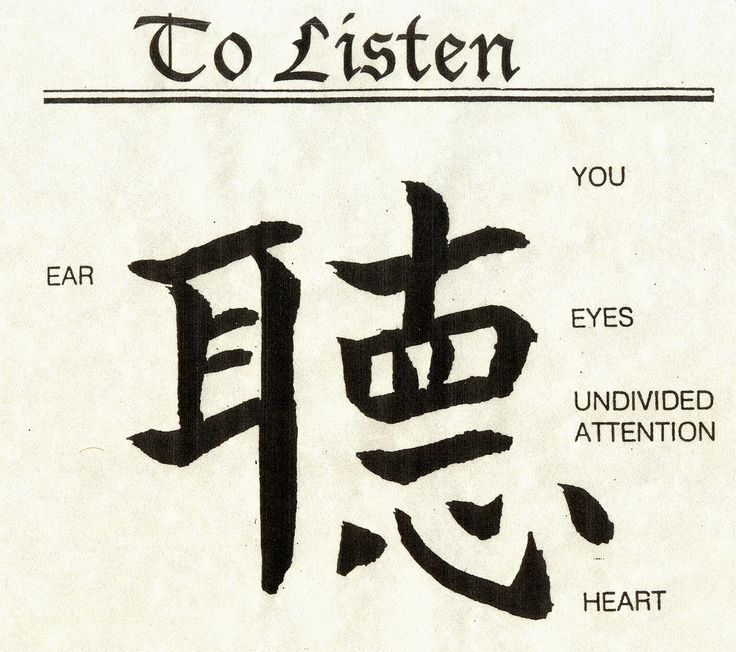
Interestingly, the ancient Chinese character for the word “listen” gives us a beautiful and layered picture of what true listening requires. The character is Ting (听), pronounced T-I-N-G. At a glance, it may look simple, but it’s composed of several different parts, each representing an essential element of deep, active listening.
Let’s break it down:
- Ears (耳): You must hear what the person is saying.
- Eyes (目): You must be visually present and aware—watching for body language, emotion, and unspoken cues.
- Heart (心): You must be emotionally connected. Listening is not a head-only activity. It involves empathy.
- Undivided attention (一): The line across the top represents giving someone your full, undistracted presence.
- King (王): Interestingly, the radical for “king” is included, suggesting that to truly listen is a noble act. There is dignity and power in attentive listening.
So, when the Chinese use the word Ting, they don’t just mean “hear the words.” They mean to listen with your whole being. With your ears, your eyes, your mind, and your heart.
Isn’t that beautiful? And doesn’t that sound a lot like what James 1:19 is calling us to?
Listening as an Act of Love
When you listen like this, it’s not just about communication. It’s about communion. Real listening tells someone: You matter. I value what you’re saying. I am willing to slow down and be present with you.
And isn’t that what love looks like?
Too often, we think we’re loving people when we “tell them the truth.” But if that truth comes without listening, it usually comes without love. Listening first doesn’t mean we compromise truth. It means we clothe truth in compassion.
Jesus never sacrificed truth, but He always led with love. That’s our model.
Why Listening Deescalates Anger
James ties listening directly to controlling our anger. Why?
Because anger often rises in the absence of understanding.
We get angry when we feel dismissed.
We get angry when we assume motives.
We get angry when we’re not heard—or when we don’t hear correctly.
But what if listening could break that cycle? What if, instead of reacting in frustration, we responded with empathy? What if we replaced assumption with curiosity?
Here’s the thing: Listening slows you down. And when you slow down, your anger doesn’t have the same power. You start to see the other person not as a threat or an opponent, but as a fellow image-bearer of God. And that changes everything.
Practicing T-I-N-G in Real Life
So how do we live this out? How do we become quick to hear, slow to speak, and slow to anger in a noisy, opinion-driven world?
Here are a few practical steps you can start practicing today:
1. Be Fully Present
Put the phone down. Turn off distractions. Make eye contact. Listening well begins with being there—mentally, emotionally, physically.
2. Ask Questions Instead of Making Statements
Instead of jumping in with your opinion, ask, “Can you help me understand what you mean by that?” or “Why is that important to you?” This builds trust and deepens connection.
3. Paraphrase What You Heard
Say something like, “So what I hear you saying is…” This helps clarify meaning and shows you’re genuinely engaged.
4. Check Your Emotions Before Responding
If you feel anger rising, pause. Breathe. Pray. Invite the Holy Spirit into that space before you speak. Remember: just because something is true doesn’t mean it needs to be said right now.
5. Listen Without Trying to Fix
Sometimes, people don’t need a solution. They just need to be heard. Listen not to fix, but to understand.
6. Lead With Empathy
Try to feel what the other person feels. Listening with your heart means you don’t just hear the words; you care about the person saying them.
The Fruit of Listening
When we learn to listen well, everything changes:
- Relationships deepen. People trust those who listen well.
- Wisdom grows. We become more thoughtful, more discerning.
- Conflict decreases. Many arguments dissolve when someone simply feels heard.
- Influence increases. People are drawn to those who make them feel seen and understood.
- Christ is glorified. We reflect the character of Jesus when we embody humility and compassion.
Listening isn’t passive—it’s powerful.
And it’s something the world desperately needs more of.
Listening Like Jesus
There’s a moment in Scripture that captures this perfectly. In Luke 24, after the resurrection, two disciples are walking on the road to Emmaus. They are heartbroken. Confused. Angry. Jesus walks with them—but He doesn’t start preaching. He asks questions. He listens. And only after they’ve poured out their hearts, only after He’s heard them, does He begin to open the Scriptures to them.
That’s our model.
Jesus didn’t rush to correct.
He listened with patience.
He spoke with wisdom.
He loved with compassion.
If He—the all-knowing Son of God—chose to listen first, how much more should we?
A Final Word
Let’s return to James 1:19 one last time:
“Let every person be quick to hear, slow to speak, slow to anger.”
This isn’t just about being a better communicator. This is about being more like Christ.
We don’t need to have the last word. We need to listen to the first Word—the Word made flesh—who calls us to walk in humility, patience, and love.
So today, ask yourself:
Am I listening to understand—or listening to reply?
Am I bringing peace—or fueling division?
Am I reflecting Jesus—or reacting like the world?
The good news is this: It’s never too late to slow down, lean in, and listen with your whole heart.
“Speak in such a way that others love to listen to you.
Listen in such a way that others love to speak to you.”
May we all become the kind of people who listen like that.







 Pastor Tricia's Ramblings
Leave a comment