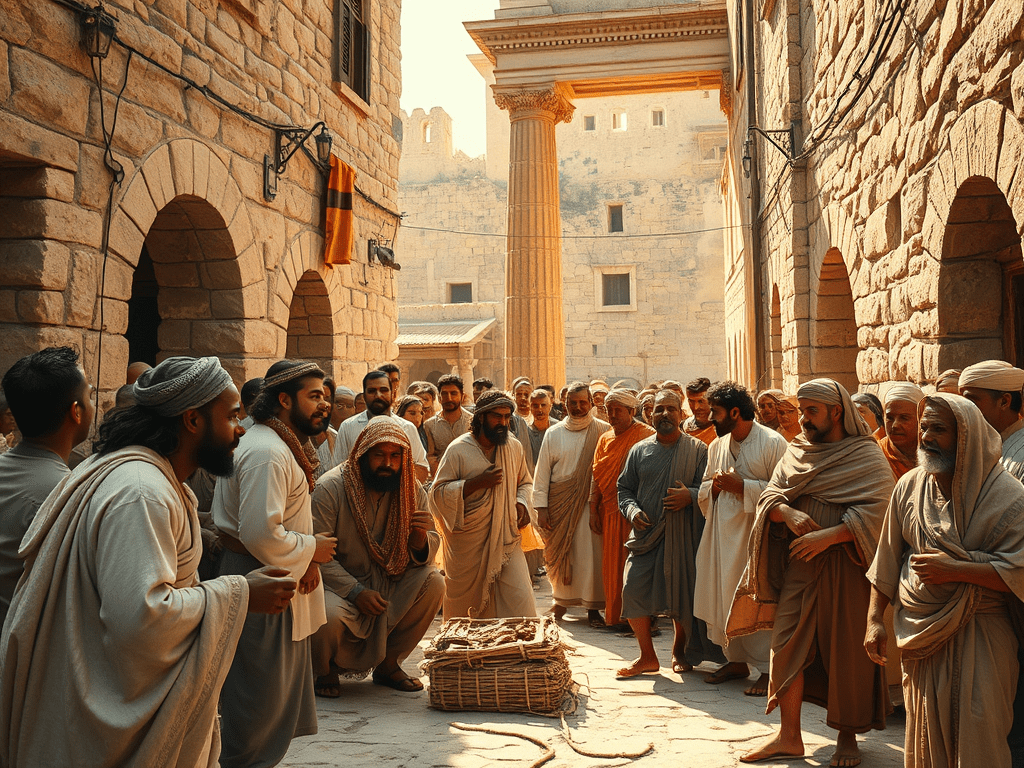
(1 Thessalonians 1:1–3)
If you’ve ever thought following Jesus meant smooth sailing, think again. The early church knew better. They were waiting, working, and walking out their faith in a hostile world — and they did it with courage, endurance, and joy.
Paul’s first letter to the Thessalonians reminds us what real faith looks like when the world around you doesn’t make it easy to believe.
Setting the Scene
The book of 1 Thessalonians may have been the first letter Paul ever wrote. He was writing from Corinth around AD 50–51, just after being driven out of Thessalonica by angry mobs who opposed his message. This was a young, vibrant, but persecuted church. Most of its members were Gentiles — new believers who hadn’t grown up under Jewish law or tradition.
Paul, ever the pastor and theologian, wrote to affirm them, strengthen them, and answer their questions — especially about the return of Jesus. You see, they believed Christ was coming back soon. Like, any day now. And honestly, that expectation fueled how they lived.
They weren’t sitting around, twiddling their thumbs, staring at the sky. They were living with urgency, with purity, with purpose. Paul wanted them to stay grounded in that hope, to keep their eyes on Jesus even when life got tough, and to keep growing in faith, love, and endurance.
Sound familiar? We’re living in that same tension today — waiting for Christ’s return while trying to live faithfully in a world that seems to be falling apart.
Grace First, Then Peace
Paul begins this letter the same way he begins all of them:
“Grace to you and peace from God our Father and the Lord Jesus Christ.” — 1 Thessalonians 1:1
There’s something intentional here. Grace always comes first. Peace follows.
You can’t have peace without grace. You can’t experience true rest in your spirit until you’ve received the unearned, undeserved favor of God through Jesus Christ. We keep trying to find peace in our schedules, in our relationships, or in our control — but peace doesn’t come from perfect circumstances. It comes from a perfect Savior.
Paul was thankful for this church. In fact, he said:
“We give thanks to God always for you all, making mention of you in our prayers, remembering without ceasing your work of faith, labor of love, and patience of hope in our Lord Jesus Christ.” — 1 Thessalonians 1:2–3
Those three words — faith, love, and hope — are the heartbeat of the Christian life. They’re not just abstract concepts. They’re living, breathing realities that shape who we are and how we live.
The Work of Faith: Turning to God
Paul starts with their “work of faith.” That might sound strange — isn’t faith about believing, not working?
Yes, but real faith works. It moves. It acts. It transforms.
Faith isn’t passive; it’s active trust in God that changes how we live. When the Thessalonians heard the gospel, they didn’t just nod in agreement. They turned from idols to serve the living and true God.
“For they themselves declare how you turned to God from idols to serve the living and true God, and to wait for His Son from heaven.” — 1 Thessalonians 1:9–10
Notice the order: they turned to God, and then from idols. Paul didn’t walk in and tell them to stop worshiping false gods. He simply preached Christ, and when they turned toward Him, everything else lost its power.
That’s how it still works today. You don’t clean yourself up to come to God. You come to God, and He cleans you up.
When you truly encounter Jesus, you can’t keep bowing to the old idols — success, comfort, control, approval, money. They crumble when you meet the real King.
Faith produces visible fruit. James says, “Faith without works is dead” (James 2:17). True faith doesn’t just talk; it walks. It shows up in your choices, your values, your words, and how you treat people.
So, here’s the question: Is your faith alive and working, or is it sitting still?
The Labor of Love: Serving from the Heart
Next, Paul talks about their “labor of love.”
Those two words don’t seem like they go together, do they? Labor sounds exhausting. Love sounds easy and warm. But when love is genuine, it works.
Love labors. It sacrifices. It keeps showing up when it’s not convenient. It serves without keeping score.
This kind of love is not based on emotion; it’s anchored in devotion. Jesus said, “By this all people will know that you are my disciples, if you have love for one another” (John 13:35).
The Thessalonians’ love was visible. Their community saw it. Their faith wasn’t a private belief system — it was a public lifestyle. When you love people like Jesus, it catches attention.
This is the kind of love that gets its hands dirty. It’s the kind of love that rolls up its sleeves and steps into the mess. Love that cooks a meal for a grieving neighbor. Love that forgives when it would be easier to walk away. Love that stays when others leave.
It’s easy to say “I love God,” but 1 John 4:20 challenges us:
“Whoever claims to love God yet hates a brother or sister is a liar. For whoever does not love their brother and sister, whom they have seen, cannot love God, whom they have not seen.”
Love labors because it’s motivated by the love that Christ first showed us.
You can’t fake that kind of love. You can only live it when the Holy Spirit fills your heart and renews your mind.
The Patience of Hope: Waiting with Expectation
Finally, Paul mentions their “patience of hope.”
The Thessalonians believed Jesus could return at any moment — and they lived like it. That hope didn’t make them lazy; it made them faithful.
Hope gives you endurance when everything else says “give up.” It’s what keeps you praying when answers seem far away. It’s what keeps you loving when it feels like no one notices.
Hope isn’t wishful thinking. It’s confident expectation. It’s knowing who God is, what He’s promised, and that He will keep His Word.
Paul wanted them to fix their eyes on that hope. In 1 Thessalonians 4:16–18, he writes one of the most powerful promises in Scripture:
“For the Lord Himself will descend from heaven with a shout, with the voice of the archangel and with the trumpet of God. And the dead in Christ will rise first. Then we who are alive and remain shall be caught up together with them in the clouds to meet the Lord in the air. And thus we shall always be with the Lord.”
That’s our future. That’s our hope. And Paul finishes it by saying, “Therefore encourage one another with these words.”
Hope isn’t meant to scare us — it’s meant to steady us.
When you know who wins in the end, you can endure whatever’s happening in the middle.
Faith, Love, and Hope — Past, Present, Future
Paul’s three graces — faith, love, and hope — cover every part of our lives.
- Faith looks back — at the cross, at the moment you turned from idols to serve God.
- Love lives in the present — it’s your daily response to God’s grace through service and compassion.
- Hope looks forward — to the day Christ returns and every tear is wiped away.
Faith anchors you.
Love activates you.
Hope sustains you.
And when all three are working together, you become an example like the Thessalonian church — people who live boldly, love deeply, and wait expectantly.
When the Waiting Gets Hard
Let’s be honest: waiting for Jesus to return isn’t always easy. It’s been two thousand years, and sometimes it feels like we’re just holding on, trying to keep the faith while the world spins out of control.
But 2 Peter 3:9 reminds us,
“The Lord is not slow in keeping His promise, as some understand slowness. Instead He is patient with you, not wanting anyone to perish, but everyone to come to repentance.”
God’s delay isn’t neglect — it’s mercy. He’s still reaching people. And until He returns, our mission remains the same: to live holy, love well, and shine brightly in a dark world.
So while we wait, we work. While we hope, we serve. While we endure, we keep our eyes fixed on the One who’s coming back.
Reflection & Challenge
Paul’s words to the Thessalonians aren’t just ancient encouragement — they’re a mirror for us today.
Ask yourself:
- Is my faith active, or has it become routine?
- Is my love sacrificial, or self-serving?
- Is my hope alive, or have I let discouragement dull it?
This week, take inventory of your spiritual armor. What “idols” do you still lean on for comfort or identity? What areas of service can you step into out of love? And where do you need to renew your hope in God’s promises?
Faith, love, and hope aren’t just theology — they’re a lifestyle.
So, live today like you believe He’s coming back tomorrow. Let your faith move you, your love fuel you, and your hope steady you.
Because that’s what the Thessalonian church did — and the world saw Jesus in them.
Live Bold. Live Set-Apart. Live in Christ.




 Pastor Tricia's Ramblings
Leave a comment